

For waterproofing contractors, building material distributors, and procurement professionals, it is essential to adopt appropriate waterproofing solutions based on the different roofing substrates, structural conditions, and construction requirements.Therefore, it is important to choose the right liquid waterproofing membrane to prevent roof leaks.
This article compares three common liquid waterproofing membranes—polyurea, acrylic, and silicone—showing their respective strengths in terms of strength, flexibility, adhesion, weather resistance, and application requirements.
What Is a Liquid Waterproofing Membrane?
A liquid waterproofing membrane is a coating applied in liquid form to a prepared surface. After curing, it forms a continuous protective layer that helps prevent water penetration.
Compared to traditional sheet waterproofing membranes, liquid waterproofing membranes are suitable for a wider range of applications. Because they can conform to irregular substrates and effectively cover areas such as corners, joints, and roof penetrations.
Three Common Types of Liquid Waterproofing Membranes
Polyurea Waterproofing Membrane
Polyurea waterproofing membrane is a liquid waterproofing membrane composed primarily of high-molecular-weight polymer resins, supplemented by mineral fillers and functional additives. After curing, it can form a dense, continuous waterproof layer.
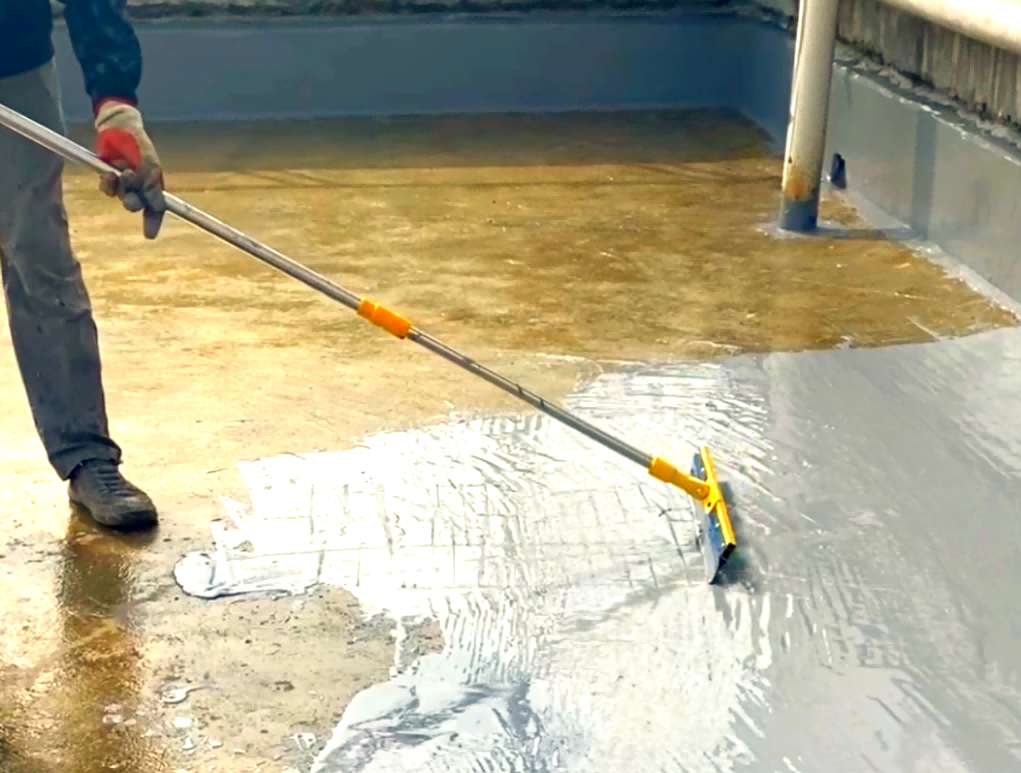
Key properties:
- High strength: Provides good resistance to mechanical stress.
- High elongation: Adapts structural movement and deformation.
- Strong adhesion: Bonds firmly to properly prepared and compatible substrates.
- Aging resistance: Resists environmental aging.
Typical applications:
Polyurea waterproofing membrane can be used for concrete roofs, buildings, basements, toilets, swimming pools, and water reservoirs.
Application requirements:
The substrate should be clean, firm, and free from standing water.
The temperature of construction is recommended above 5 °C.
Acrylic Waterproofing Membrane
As the name suggests, acrylic waterproof membrane is a water-based material primarily composed of acrylic. It forms a flexible protective layer with excellent adhesion after curing.
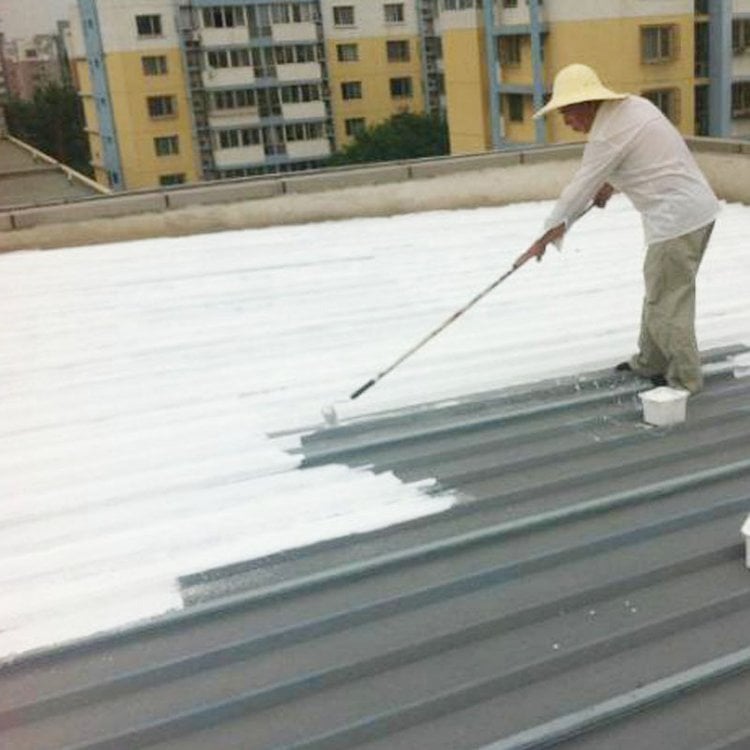
Key properties:
- Excellent adhesion: Bonds firmly with various metal sheets.
- Flexible coating: Accommodates slight displacement caused by the thermal expansion and contraction of metal.
- Corrosion resistance: Helps the substrate remain intact even in acids, bases, or other corrosive liquid environments.
- Thermal insulation: Effectively reflects sunlight to block out heat.
Typical applications:
Acrylic waterproof membrane are commonly used on metal roofs, concrete, solid brick walls, and wooden surfaces; they can also be applied to tempered glass, curtain walls, and lighting panels.
Application requirements:
The substrate should be clean and free of standing water.
It must be stirred well before use, and water must not be mixed in during the process.
The temperature of construction is recommended 5 °C–35 °C and the relative humidity is below 85%.
Silicone Waterproofing Membrane
Silicone waterproof membrane is a liquid waterproof membrane with high solids content silicone, no solvents, no water and no asphalt. Upon curing at room temperature, it forms a a highly elastic rubber layer.
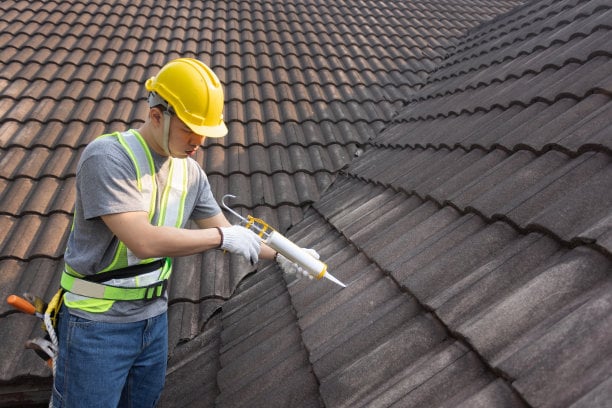
Key properties:
- High elasticity: Accommodates certain degrees of substrate movement.
- UV resistance: Provides good resistance to sunlight and outdoor exposure.
- Temperature resistance: Maintains good flexibility at temperatures ranging from -60 °C to 120 °C.
- Thermal insulation: Features high gloss and a high solar reflectance coefficient.
- Weather resistance: Ensures a service life of up to 20 years or more.
Typical applications:
Silicone waterproof membrane can be applied to exposed balconies and terraces, as well as to building structures in contact with the soil, such as basements, foundations, and pipe sleeves.
Application requirements:
The substrate surface must be firm, and no residual oil and dust.
Construction tools must be cleaned before the glue solidifies.
The substrate surface can be slightly damp, but ensure there is no standing water.
Comparison of Polyurea, Acrylic, and Silicone Membranes
|
Liquid waterproofing membrane |
Polyurea |
Acrylic |
Silicone |
|
Tensile strength |
>16.0 MPa |
≥1.5 MPa |
≥2.0 MPa |
|
Elongation at break |
300%–600% |
80%–200% |
200%–300% |
|
Temperature resistance |
-40℃~80℃ |
-20℃~80℃ |
-60℃~120℃ |
|
UV resistance |
Excellent |
Good |
Excellent |
|
Resistance to |
Good |
Bad |
Excellent |
|
Application requirements |
Clean,firm, water-free |
Clean, water-free |
Clean,firm, |
|
Shelf life |
6 months |
12 months |
12 months |
|
Price |
Medium |
Low |
High |
Note: The above price levels are not exact quotations, but only represent market positioning reference. Actual cost depends on coating thickness, labor charges, shipping costs, and specific project specifications.
FAQ
1. Which Is the Best Liquid Waterproofing Membrane for a Roof?
There is no "one-size-fits-all" solution for every roof. It depends largely on the compatibility of the material with the substrate, as well as other specific project requirements.
Polyurea waterproofing membrane is suitable for concrete roofs, while acrylic membrane is well-suited for various metal or wooden roofs. For exposed roofs exposed to long-term direct sunlight, silicone waterproofing membrane is the better choice.
2. Is Polyurea Better Than Acrylic for Roof Waterproofing?
Polyurea waterproof membrane has higher mechanical strength and elongation, but it is usually more expensive. While acrylic waterproof membrane is slightly less strong, it is often more economical, has a longer shelf life in the original packaging, and is more suitable for long-distance transportation.
3. Which Liquid Waterproofing Membrane Is More Cost-Effective?
Acrylic waterproofing membrane typically has a lower initial cost, whereas polyurea and silicone tend to have higher costs. However, the latter two are more resistant to standing water, especially silicone, which is suitable for application on slightly damp substrates.
Conclusion: Choose the Right Membrane for Your Roofing Project
Selecting the best liquid waterproofing membrane requires evaluating the roof substrate, required performance, application conditions, and total project cost.
- Polyurea: Suitable for projects requiring high mechanical strength and elasticity.
- Acrylic: A practical choice for gvarious types of conventional roof waterproofing, especially for metal roofs.
- Silicone: Worth considering for roofs of the areas subject to prolonged direct sunlight or excessive annual rainfall.
Looking for a suitable liquid waterproofing membrane for your next project?
YURU Engineering Materials, with more than 20 years of experience in waterproofing material R&D, production, and sales, provides various waterproofing solutions for different construction applications.
Contact YURU to request product specifications, technical data sheets, and application recommendations. Our team can help you identify suitable materials according to your project requirements.
