
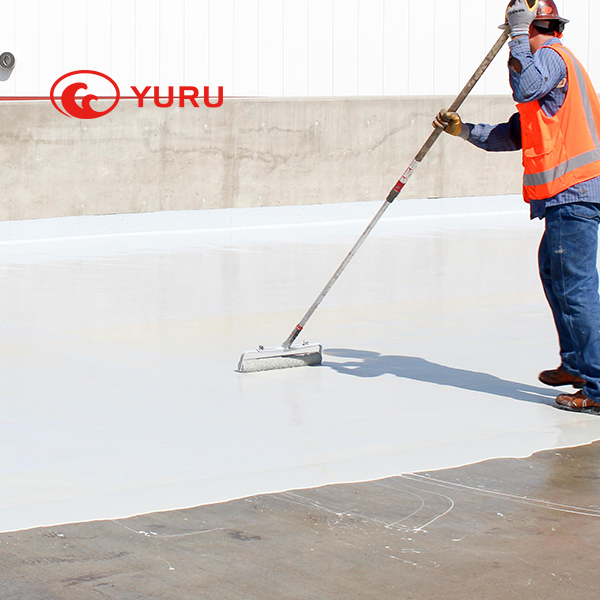
Acrylic is selected for exposed roofing, metal substrate, application temperature window (UV) and project movement. Polyurethane coating is applied where higher strength is required, abrasion resistance is required, and where parts of the substrate are subjected to long-term water pressure or are immersed. Single-line criterion: If exposed to the sun for long periods of time, it is made of acrylic; if exposed to water for long periods of time, it is made of polyurethane. Remember: The service life of an application is not dependent on the names of materials, but "material × substrate × application compliance × exposure conditions".
The Short Answer: When to Choose Which
|
Your project |
Recommended |
|
Metal roof, exposed, strong UV |
Acrylic |
|
Concrete roof, exposed |
Acrylic |
|
Damp substrate, no drying window |
Polyurethane |
|
Long-term ponding / high water pressure |
Polyurethane |
|
Roof requiring fast return to traffic |
Acrylic |
|
Minimal production downtime (hot work restricted) |
Acrylic |
|
Wood substrate |
Acrylic |
|
Recoating existing membranes (PVC/asphalt/SBS-APP/EPDM/TPO) |
Acrylic |
How the Two Chemistries Actually Differ
Acrylic: A single-component, water-based, film-forming (emulsion) system that forms a film through the evaporation of water and the fusion of polymer particles. Features: permeable, cold-applied, one-pack, can be applied directly from open-top drums.
Polyurethane: Various reaction systems, the most common of which are single-component moisture-curing systems or two-component A/B systems that are cured by such a reaction. Comments: The film is very good and dense with high mechanical performance. Its sensitivity to substrate moisture varies by system.
The main difference: different curing mechanisms → the "breathable vs dense" dividing line → which in turn determines whether the coating is suitable for exterior use and for substrates that are moist or wet.
Clarification of terms: "Polyurethane waterproofing" is the term used in the industry and is especially confusing because it is used to describe both one- and two-component products, which have vastly different performance. The two cannot be lumped into the same category.
Head-to-Head Comparison: 12 Dimensions
|
Dimension |
Acrylic |
Polyurethane |
Which wins, and when |
|
Suitable substrates |
Metal, concrete, wood, existing membranes |
Concrete, metal, damp substrates |
Acrylic for breadth; PU for damp concrete |
|
Damp substrate tolerance |
Limited (no standing water, RH<85%) |
Higher |
PU on damp substrates |
|
Breathability |
High |
Low |
Acrylic where moisture escape matters |
|
UV / exterior stability |
Excellent |
Usually needs protective layer |
Acrylic for exposed roofs |
|
Movement accommodation (elongation) |
≥150% |
Varies; typically high |
Both capable; acrylic sufficient for most roofs |
|
Mechanical strength & abrasion |
Moderate |
High |
PU for high-traffic, abrasive conditions |
|
Long-term immersion resistance |
Poor |
Good |
PU for ponds, underground, tanks |
|
Application temperature window |
5–35 °C |
Wider, system-dependent |
PU in colder conditions |
|
Drying / curing speed |
Fast (water evaporation) |
Slower (reaction) |
Acrylic for fast turnaround |
|
Recoat & intercoat compatibility |
Good within system |
Must verify |
Same-system recoating preferred for both |
|
Environmental profile |
Water-based, low VOC |
Solvent or reactive; higher VOC |
Acrylic |
|
Maintenance & recoat cycle |
More frequent under extreme UV |
Longer if protected |
Depends on exposure |
Performance Under UV and Weathering
Furthermore, they also work well on exposed roofing (the polymer backbone is UV-resistant too) and due to the light-colored surface pigmentation, their high reflectance is balanced by the radiant energy of the sun on the coating. The white acrylic coating can reduce the roofing surface's temperature by 10-15 °C and will remain reflective for years.
UV exposure will also cause chalking of the PU, which will turn the coating yellow and eventually make it weak and brittle. The cheaper method to prevent this is to apply a topcoat, or add an aliphatic PU, which will extend the life of the film dramatically.
Adhesion to Different Substrates
|
Substrate |
Acrylic |
Polyurethane |
|
Metal (color coated / aluminum / galvanized / aluminum composite) |
✅ |
✅ |
|
Concrete / solid brick wall |
✅ |
✅ |
|
Wood |
✅ |
✅ |
|
Existing membranes (PVC/asphalt/SBS-APP/EPDM/TPO) |
✅ |
Test required |
|
Toughened glass / curtain wall |
✅ |
Test required |
|
FRP lighting panel / Caprone board |
✅ |
Test required |
Water Immersion and Wet Substrate Tolerance
The two chemistries differ in this respect.
Boundary of acrylic: A result of 0.3 MPa × 30 min does not indicate that acrylic can withstand long-term water immersion. It is important not to confuse exposed waterproofing with long-term water immersion.
Polyurethane's advantage zone: When used in excavations, water tanks, or wet areas exposed to water for short or long periods of time.
Judging criteria: Does water easily drain away from the roof? Is there long-term ponding? Is the water level always above the coating film? If it's yes, it's either polyurethane or other systems.
Service Life: What Actually Determines It
The material name is not a determinant of service life. Instead, service life is a function of four criteria: film thickness, preparation of the substrate, the quality of its application and exposure conditions.
Comparison model of the cost structure (don't use actual prices):
Material cost: Application rate in kg/m² x unit price of the material (this cost also includes reinforcement fabrics/geotextiles used on critical areas/detailing/thickened sections)
Labor cost: Number of coats x scheduling constraints related to the application window.
Substrate cost: These two chemistries have different substrate needs and this is a factor which is sometimes not taken into account.
Downtime costs: Cold application vs hot work / production downtime.
Maintenance and recoat cycle cost.
Total cost of ownership = material costs + labor costs + substrate preparation costs + downtime + recoating cycle costs. The most common error is to look only at the unit price.
Which One for Your Project? Decision Checklist
Answer four questions:
Is your structure exposed to long-term UV? → If yes, choose acrylic.
Is there long-term ponding or high water pressure? → If yes, choose polyurethane.
Is the application window capable of providing a dry substrate? → If no, use polyurethane.
Is avoiding hot work and production stoppages necessary? → If yes, choose acrylic.
Can You Use Both? Layering and Compatibility
General rule of thumb for intercoat compatibility: identical system first, test-coat different systems.
Disallowed systems: Under no circumstances should you try to use multiple chemical systems at the same time without checking compatibility. When using an acrylic over a polyurethane coating, its compatibility may not be guaranteed and you need to test-coat a small area and check adhesion after curing.
FAQ
Is acrylic or polyurethane better for a roof?
The judgements were made based on exposure to these elements: long-term exposure to the sun = acrylic, long-term exposure to water = polyurethane.
Is acrylic waterproofing as good as polyurethane?
It depends on the service conditions. Acrylic is best suited for visible, permeable, UV-resistant applications. The applications of polyurethane are outstanding in the fields of immersion, high water pressure, and high mechanical requirements.
Can acrylic waterproofing be used on a wet substrate?
There should be no standing water, and RH must be below 85%. Use polyurethane if the substrate is wet and there is no drying period.
Which lasts longer, acrylic or polyurethane waterproofing?
Service life are not solely determined by the material type but by the thickness of the film, preparation of the substrate, application and exposure conditions.
Can you apply acrylic coating over polyurethane?
First, test-coat a small area.Compatibility is not guaranteed.
Which is more environmentally friendly?
Acrylic – a water-based low-VOC system.
Conclusion
One-line standard: long-term sun exposure equals acrylic, and long-term water immersion equals polyurethane. Whatever you choose, you will find that compliance with proper application practices has a greater impact on the final result than the choice of material itself.
YURU Engineering Materials products include acrylic waterproof coatings and polyurethane waterproof coatings, and can provide comprehensive on-site construction support. All of them have passed ISO 9001, ISO 14001 and CE certifications.
Table of Contents
- The Short Answer: When to Choose Which
- How the Two Chemistries Actually Differ
- Head-to-Head Comparison: 12 Dimensions
- Performance Under UV and Weathering
- Adhesion to Different Substrates
- Water Immersion and Wet Substrate Tolerance
- Service Life: What Actually Determines It
- Which One for Your Project? Decision Checklist
- Can You Use Both? Layering and Compatibility
- Conclusion
