
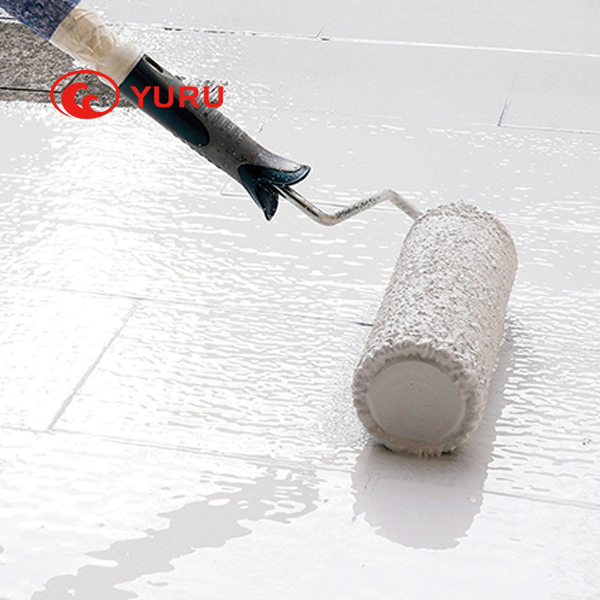
Acrylic roof coatings are one of the most affordable solutions for metal, concrete, and wood roofs in moderate climates. The main benefits are that they don't pose a fire hazard in cold applications, they are breathable, they have a great bond, they dry quickly, and they are resistant to both UV exposure and chemicals. The disadvantages are the requirement for multiple coats (full drying times between coats), sensitivity to temperature and humidity during application and lack of suitability for areas with continuous water ponding. Acrylic coatings are suitable for "full-surface restoration and renewal of exposed roofs" and they are not suitable as a "waterproofing layer for permanently submerged surfaces."
What Are Acrylic Roof Coatings?
Acrylic roof coatings are water-based single-component coatings which are formed by the coalescence of an acrylic ester polymer emulsion. Moisture curing, solvent curing or chemical crosslinking, as accomplished with asphalt, silicone or polyurethane coatings, respectively, are not employed in the case of acrylics. The end result is a continuous membrane that will roll with the substrate and not form a patchwork quilt with a lot of overlap at the edges.
The 7 Advantages of Acrylic Roof Coatings
1. Cold-applied with no hot work or open flame
Acrylic coatings are applied at ambient temperature, with no requirement for torching, open flame or fire watching. This translates to no hot work permits, no production shutdowns and no fire-safety issues for operating factories, warehouses, and data centers.
2. Scented or unscented to help mask odors from the substrate
Acrylics are one of the most permeable roofing products out there. This means that any residual moisture in the substrate can escape as a vapor and not get trapped, which could otherwise result in blisters and/or delamination.
3. Adhesion to metal, concrete and wood is very strong
Acrylics applied in an appropriate formulation will adhere to a broad spectrum of substrates such as metal panels, concrete, masonry and wood and will form a continuous membrane that adheres to the entire surface area.
4. Quickly drying and developing a hard yet flexible film
Acrylic coatings are quick to dry under favorable conditions and have film properties that are hard enough to resist foot traffic while retaining flexibility to accommodate thermal movement and minor cracks in the substrate.
5. UV stability and reflective finish for cool-roof benefit
White acrylic coatings bounce back a lot of the sun's heat, which helps to reduce surface temperatures and cooling loads. Acrylic chemistry is resistant to UV degradation and helps a coating to retain reflectivity and color throughout its life.
6. Resistant to oil, chemical dust, acids and alkalis
Use acrylic films in industrial settings where roofs must withstand exposure to oil, chemical dust, acids and alkalis, as they can resist degradation caused by these substances.
7. Green environmental protection
Acrylic coatings are water-based, low VOC (volatile organic compounds) and easy to clean up with soap and water, with little odor and no flammable solvents. They meet more stringent environmental requirements and are safe for the occupants of buildings and workers.
The 4 Disadvantages You Should Know Before Buying
1. Multiple coats are required, with full drying time between each coat
Acrylic roof coatings are not a one-coat product. Most systems will need 2 or more coats and any seams or penetrations will need reinforcement fabric. This will take a longer amount of time because each coat needs to dry thoroughly before the next coat can be applied.
2. Strict application window: 5–35°C and RH below 85%
Acrylics will not work in freezing temperatures or when rain is expected. Excessive moisture delays drying, and may inhibit film formation. Practical window = above 50°F (10°C) and RH below 85%.
3. Not recommended for constant water immersion or ponding areas
Water-based acrylic films will break down when continuously exposed to water. Roof areas with poor drainage and persistent ponding are not suitable for any type of coating and should be improved by providing roof drainage or by using an alternative coating chemistry.
4. More frequent recoating than silicone under extreme UV exposure
Although acrylic materials are UV-resistant, acrylic films may gradually become degrade due to exposure to UV. Acrylic coatings might need more recoating cycles than silicone, depending on the amount of UV exposure.
Acrylic vs Silicone vs Polyurethane: A Quick Comparison
|
|
Acrylic |
Silicone |
Polyurethane |
|
Best substrate |
Metal, concrete, wood |
Most substrates, especially challenging ones |
SPF, concrete, metal |
|
Wet/ponding tolerance |
Poor |
Excellent |
Moderate to good |
|
UV exposure suitability |
Good |
Excellent |
Good (aliphatic) |
|
Adhesion to metal |
Good |
Good |
Excellent |
|
Breathability |
Excellent |
Good |
Low to moderate |
|
Number of coats |
2+ |
1–2 |
2 (base + top) |
|
Typical use case |
Exposed roof restoration, cool roofs |
Ponding-prone roofs, extreme weather |
High-traffic, impact-resistant roofs |
Which Roofs Are a Good Fit?
Acrylic coatings are best used on low-slope metal roofs (standing-seam, corrugated, R-panel), concrete roof decks and wood substrates in moderate climates, where drainage is adequate. They can be used particularly for cool-roof retrofits, where solar reflectivity is desired, and for projects where cold application and low odor are desired because the building is not vacant or because of fire restrictions.
When Acrylic Roof Coating Is the Wrong Choice
Low areas where ponding or runoff frequently occurs. Acrylics will break down when continuously wet.
Pojects where the window of 5-35°C and RH below 85% are not met. Proper cure is hindered in cold, wet and humid conditions.
Substrates that are too wet and haven't dried out. When moisture is trapped, blistering will occur.
Structural defects of the roofs. Coating is not a repair solution if the deck is rotted, corroded through or structurally unsound.
What Determines How Long an Acrylic Roof Coating Lasts?
There are four variables that determine service life:
Film thickness. About 2.5 kg/m² is needed to apply a dry film of 1 mm. The thinner the film, the faster it will deteriorate when exposed to weather conditions.
Application compliance. When applied outside the temperature and humidity range, it will not cure properly and fail prematurely.
Substrate preparation. Clean, sound and properly primed surfaces promote adhesion. Loose material or contamination compromises the whole system.
Ponding exposure. Periodic waterlogging will cause rapid degradation, even if it occurs only for brief periods. Good drainage is a must.
FAQ
Are acrylic roof coatings any good?
Yes, with the proper use. They are good for restoring metal, concrete and wood roofs in moderate climates where drainage is adequate. They will not withstand continuous wet or freeze-on conditions.
How many coats of acrylic roof coating do I need?
A typical system consists of reinforcement fabric at seams and penetrations, and 1 to 2 finish coats. The exact value is dependent upon the dry film thickness and substrate condition specified.
Can acrylic roof coating be applied over an existing roof coating?
It is dependent on compatibility. Acrylics bond with most existing coatings, but silicone and certain other chemistries may require a bonding agent or may not bond with an acrylic topcoat. Always check compatibility with the manufacturer.
Are acrylic roof coatings waterproof?
Yes, acrylic coatings are waterproof for their intended service conditions, as they form a completely adhered seamless membrane. But the term waterproof does not imply resistance to hydrostatic pressure or immersion.
Do acrylic roof coatings stop leaks permanently?
They prevent leaks caused by broken seams, small cracks, and the deterioration of the surface. Structural leaks, whether caused by broken fasteners, compromised decking or major membrane problems, must be repaired structurally before they can be coated.
Conclusion
For the right project, acrylic roof coatings are a great option in terms of cost, performance and ease of application. In moderate climates, they reflect and scatter UV rays, withstand sun damage and remain opaque and intact on exposed metal and concrete roofs, while providing a no-flame and no-odor restorative roof membrane compared to solvent-based alternatives. The problem is that they don't work when people ask them to do something they were not meant to do, such as continuous ponding, curing in cold or wet weather, or overcoming structural weaknesses. Match the coating to the roof, and acrylics will provide years of service.
