
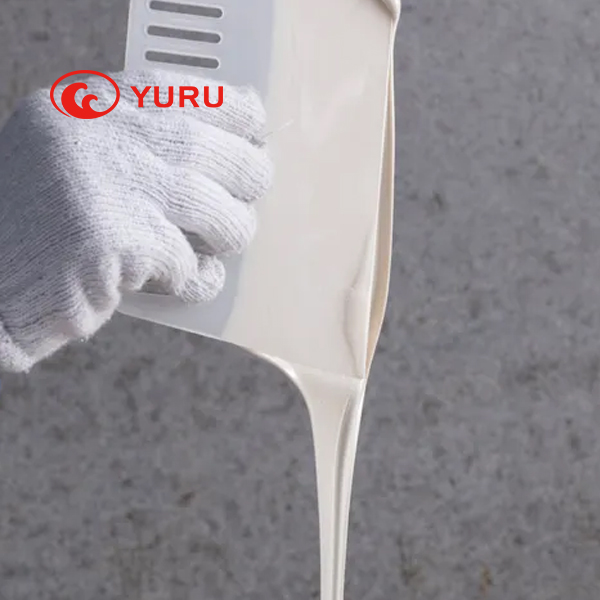
Use liquid-applied systems if the geometry is complex, there are many details, a seamless membrane is needed, the project is a renovation, or the substrate is irregular. Use sheet membrane where there is a large substrate area, an imposed thickness is desired by the manufacturer, or the surface needs to be usable right after it is installed. One-line criterion: Consider where the main problem lies: for liquid-applied systems, it is the quality of on-site construction; for sheet membranes, it is the risk of failure at the field lap joints. Key qualification: This is not a question of quality of the materials but the question of risk allocation. The two categories also include several materials, which will be discussed separately below.
Two Delivery Formats, Not Two Materials
Liquid-applied is available in liquid form and is applied at the job site by brush, roller, trowel or spray onto the surface of the substrate. It is an application method, not a chemistry: acrylic, polyurethane, polyurea, liquid rubber, cementitious and bituminous are all able to be liquid applied.
Sheet membrane is built at the factory in rolls and then installed on-site. It is also not one single material, though, as all the following substances can be used in: EPDM, butyl rubber, PVC, TPO, modified bitumen, and HDPE.
Therefore, the actual issue with "liquid vs sheet" is: What is the preferred place for quality control – factory or site?
Sheet membrane: Guaranteed and made at the factory thickness, but on-site laps/terminations.
Liquid applied: Film thickness and film quality are dependent on on-site application and can be seamless and flexible to complex geometries.
A brief comment on a third category – integral waterproofing – which involves adding waterproofing admixtures to the concrete mixture. It's mentioned in passing in this article and isn't discussed in detail.
What "Liquid-Applied" Actually Includes
|
System |
Carrier / curing |
Typical advantage |
Typical limitation |
|
Acrylic |
Water-based, film formation by evaporation |
UV-resistant when exposed, good adhesion, cold-applied |
Not resistant to long-term ponding (water-based systems can re-emulsify) |
|
Polyurethane (1K / 2K) |
Reactive curing |
Strength, impact resistance, abrasion resistance |
Sensitive to substrate moisture and application conditions |
|
Polyurea |
Two-component rapid reaction |
Extremely fast cure, high elongation |
Requires specialized two-component spray equipment |
|
Silicone |
100% solids / high solids, no carrier |
Best long-term ponding resistance, longest reflectivity retention |
Low surface energy, poor compatibility with other systems (limits future recoating) |
|
Liquid rubber / butyl |
Solvent-based or water-based |
High elasticity, good detail coverage |
Solvent-based types have VOC and odor |
|
Cementitious / polymer-modified (JS) |
Cement hydration + polymer film formation |
Compatible with concrete, resistant to water pressure |
Low flexibility, does not accommodate large movement |
|
Bituminous |
Evaporation or hot-melt |
Low cost, compatible with asphalt substrates |
Poor UV resistance (requires protective top layer) |
What "Sheet" Actually Includes
|
Sheet type |
Typical characteristics |
|
EPDM (ethylene propylene diene monomer) |
Good elasticity, weather resistance |
|
Butyl (butyl rubber) |
Good vapor barrier, often used for details and flashings |
|
PVC (polyvinyl chloride) |
Hot-air weldable, high seam strength |
|
TPO (thermoplastic polyolefin) |
Weldable, weather resistant |
|
Modified bitumen (SBS / APP) |
Hot-melt application, lower cost |
|
HDPE |
Good chemical stability, often used underground |
The 10-Dimension Format Comparison
|
# |
Dimension |
Basis |
|
1 |
Seam continuity |
Liquid is seamless; sheet has laps. Liquid wins, but seam risk converts to application risk. |
|
2 |
Film thickness control |
Sheet guarantees uniformity from the factory; liquid depends on application. Sheet wins. |
|
3 |
Complex geometry and details |
Liquid can coat continuously; sheet requires cutting and additional layers. Liquid wins. |
|
4 |
Substrate adaptability |
Liquid adapts better to irregular and old substrates; sheet requires a flat substrate. Liquid wins — liquid has high substrate preparation requirements but adapts to complex geometries. |
|
5 |
Application speed |
Liquid spray covers quickly; sheet is fast on regular large areas and trafficable immediately after installation. Depends on area and shape. |
|
6 |
Curing / waiting time |
Liquid requires multiple coats plus waiting for curing; sheet has no curing period. Sheet wins. |
|
7 |
Skill dependence |
Both depend on people, but at different stages: liquid on coating uniformity, sheet on laps and terminations. Tie, but different risk points. |
|
8 |
Equipment requirements |
Liquid needs mixing and application equipment (polyurea also needs two-component spray equipment); self-adhesive sheet needs almost no equipment, hot-melt sheet needs a torch. |
|
9 |
Fire risk |
Liquid cold application has no open flame; hot-melt sheet requires a torch and carries fire risk. |
|
10 |
Repair convenience |
Liquid can be locally recoated and remain continuous with the original; sheet local repair requires cutting and lapping. Liquid wins. |
The Answer Changes With Chemistry: Three Scenarios
The same "liquid vs sheet" question yields different answers once materials change. Three scenarios illustrate this.
Scenario 1 — Metal roof (exposed, strong UV, large thermal movement).
Liquid side: acrylic or liquid rubber suits exposed metal substrates.
Sheet side: metal roofs are generally not sheet membrane's home turf (sheet is more often used on low-slope roofs and underground).
Conclusion tendency: liquid.
Scenario 2 — Concrete deck / walkable roof (requires abrasion resistance, possible ponding).
Liquid side: polyurethane or polyurea is more suitable for their strength and abrasion resistance.
Sheet side: modified bitumen or single-ply membrane is efficient on regular large areas.
Conclusion tendency: depends on whether there is ponding and whether it is walkable — cannot be generalized.
Scenario 3 — Basement / negative side (long-term water pressure).
Liquid side: cementitious (JS) or crystalline is more compatible with the concrete body.
Sheet side: HDPE or self-adhesive membrane is widely used in underground works (self-adhesive types can be used for foundations, basements, and floor slabs).
Conclusion tendency: both formats are valid; the choice depends on application conditions and design practice.
Where Liquid-Applied Wins
Many nodes; local repair and continuous repair; high requirements for seamless coverage; renovation and recoating (liquid recoating over existing sheet membrane roofs needs to be tested in a patch first); locations in which open flame work is prohibited; complex geometry.
Where Sheet Membrane Wins
Large, flat substrates; factory-guaranteed film thickness and batch traceability required; where the surface needs to be trafficable right after installation (without waiting for curing); hot-melt types are efficient on regular roofs (but the fire risk and the requirement for a certified applicator must be accepted).
The Seam Problem: Why Detailing Decides the Outcome
At the heart of the debate: It is not the question of good or bad, but who is responsible for seams and details?
Liquid-applied: on-site film uniformity, intercoat spacing, and whether or not reinforcement layers are properly installed are all dependent on the applicator.
All lap width, termination fixing and sealing are handled on-site, but the quality of the membrane is guaranteed by the factory.
When it comes to specifications, the question should be "which one are my application guys good at?"rather than"which one is better?"
Comparing Suppliers and Brands: 6 Checks
Six items to verify when comparing suppliers:
Implementation standard: is a specific standard number stated?
Whether performance indicators are paired with test conditions: e.g., water impermeability must state "0.3 MPa / 30 min."
Dosage basis: liquid-applied materials state the dosage in kg/m² per mm of film thickness; sheet membranes state nominal thickness and roll length.
Scope statement: does it explicitly list usable substrates and unsuitable locations?
Application condition description: does it give environmental windows and process steps?
Test report availability: can it provide third-party test reports and declarations of conformity?
One-line methodology: a supplier that can provide the trio of "value + test condition + scope of application" is an order of magnitude more credible than one that only offers adjectives.
Which Should You Specify? Decision Checklist
Five questions to guide the decision:
Is the substrate geometry complex with numerous details? → Yes → lean toward liquid.
Is the area large and flat, and is a uniform film thickness record required? → Yes → lean toward sheet membranes.
Must the surface be trafficable immediately without waiting for cure? → Yes → lean toward sheet membranes (self-adhesive).
Is open flame prohibited on site? → Yes → rule out hot-melt sheet membranes.
Is your crew stronger at coating or at sheet installation? → Decide by crew capability.
After these questions, reach a conclusion and take the next step (request the corresponding system datasheet / conduct an on-site test patch).
FAQ
Is liquid-applied waterproofing better than sheet membrane?
Neither is universally better. Liquid wins on complex geometry, seams, and repair. Sheet wins on uniform thickness, factory quality control, and immediate trafficability.
Can liquid-applied waterproofing go over an existing sheet membrane?
Only after a test patch confirms compatibility. Incompatible system overlays are the most common cause of failure.
Which is faster to install?
Depends on area and geometry. Liquid spray covers quickly; sheet membrane is faster on regular large areas and requires no waiting for curing.
Which lasts longer?
Determined jointly by film thickness, substrate, application, and exposure conditions — not by format alone.
Is liquid-applied suitable for basements and wet areas?
Depends on the specific system. Underground applications commonly use cementitious / crystalline; interior wet areas commonly use JS / polyurethane.
Can you combine both systems?
Yes, but interlayer compatibility must be verified.
Conclusion
The one-line criterion is who bears the seam risk. Another qualification: The application compliance is more important than simply the format. Next steps: specify where it is and what it is exposed to → choose the format → determine the chemical system → ask for the datasheet.Acrylic, polyurethane, JS and crystalline waterproofing systems are the type of systems by YURU Engineering Materials, backed by ISO 9001, ISO 14001 and CE certification.
Table of Contents
- Two Delivery Formats, Not Two Materials
- What "Liquid-Applied" Actually Includes
- What "Sheet" Actually Includes
- The 10-Dimension Format Comparison
- The Answer Changes With Chemistry: Three Scenarios
- Where Liquid-Applied Wins
- Where Sheet Membrane Wins
- The Seam Problem: Why Detailing Decides the Outcome
- Comparing Suppliers and Brands: 6 Checks
- Which Should You Specify? Decision Checklist
- FAQ
- Conclusion
